
Tokaido / Sanyo Shinkansen
JR Central
For Kyoto, Shin-Osaka and onward services. Follow this named Shinkansen area.
KNOW YOUR STATION / MAKE TIME FOR THE CONNECTION
A big station, one clear next step.
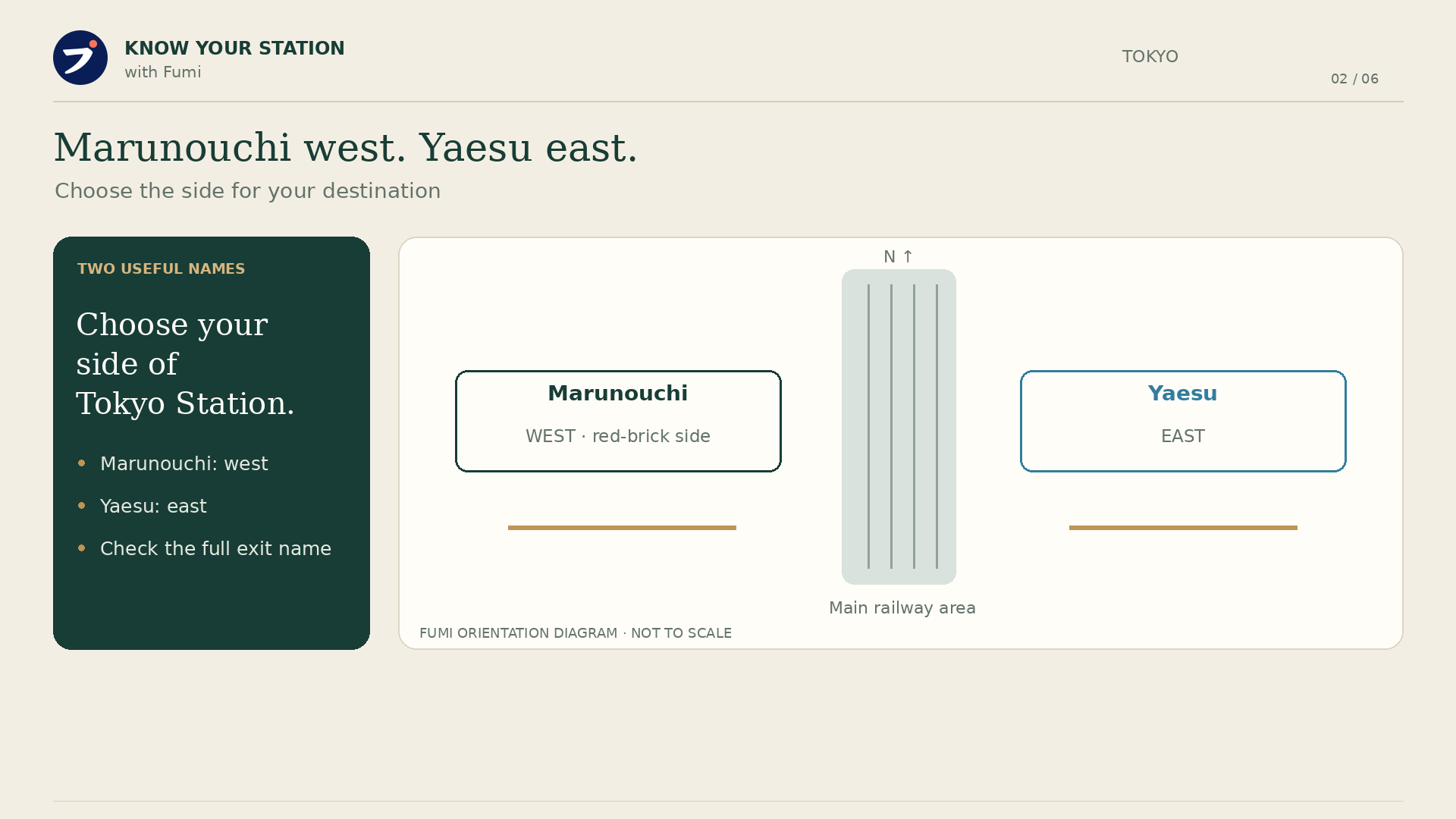
Marunouchi is west, Yaesu is east. Inside, follow the complete railway and line name.
A LITTLE ORIENTATION / 1:24
Tokyo Station is a destination and a major interchange. It has different railway areas and several levels, so think of a connection as a walk as well as a train change.
Save the line, the gate area and the exit. “Tokyo Station” alone is not a complete meeting point.
The film couldn’t load. Please try again.
Welcome to Tokyo Station. Behind its famous red brick frontage is a busy network of trains, passages and platforms. Start with two names, and the station becomes much easier to understand.
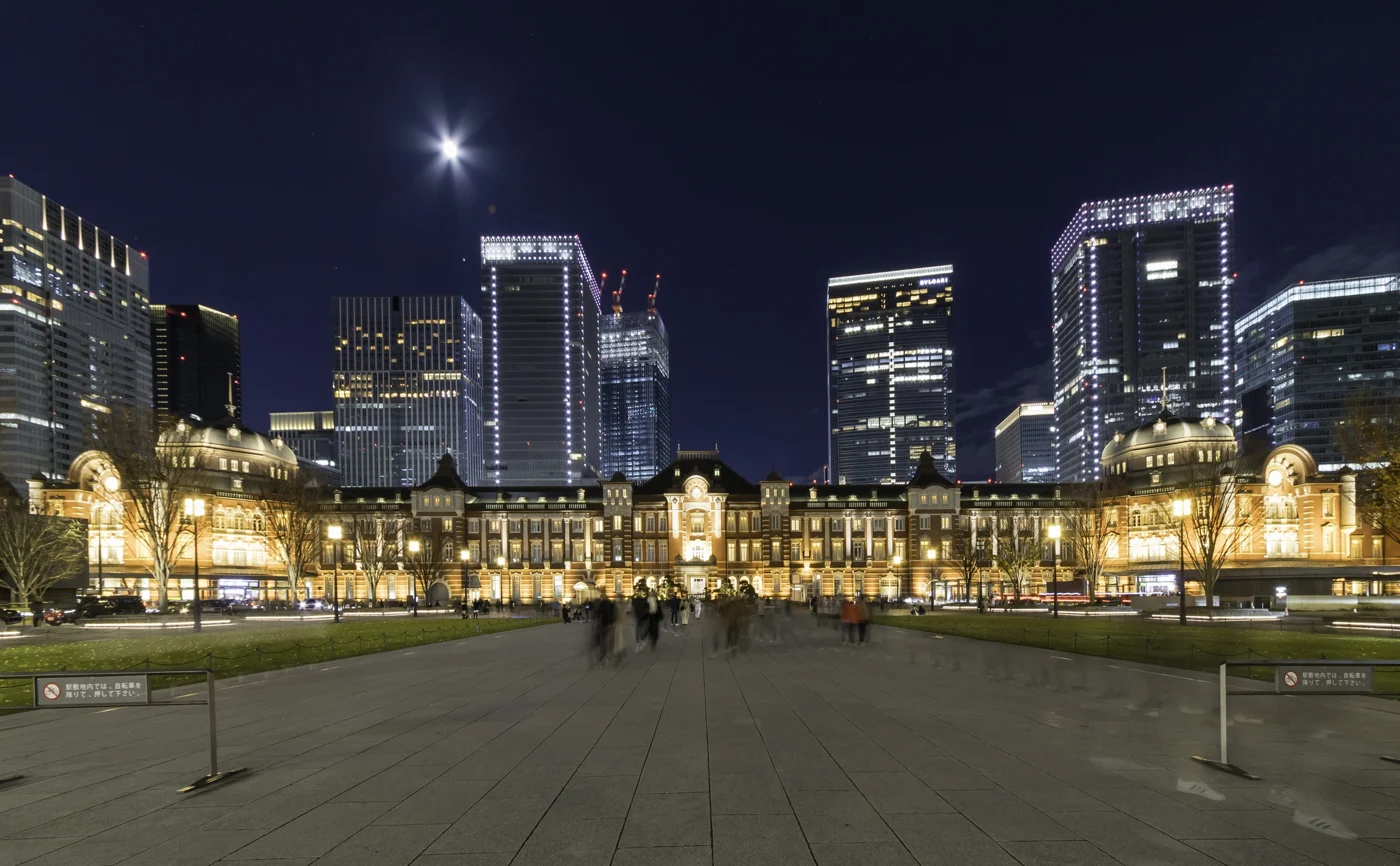
Marunouchi is the western side, beside the red brick building. Yaesu is on the eastern side. Both have several exits, so check the full exit name for your hotel or meeting point.
If you are changing trains, follow signs for the next railway and line. If you are leaving, follow your chosen exit. A familiar platform number on its own is not enough.
Tokyo has different Shinkansen areas. Services towards Kyoto and Shin Osaka use the Tokaido Shinkansen. Other bullet trains leave for northern Japan and the Hokuriku region. Match your booking to the correct signs.
Changing to the Keiyo Line? Its platforms involve a longer walk from the main station area. Follow Keiyo signs and allow extra time, especially when travelling with luggage or using lifts.
Check the official map before travelling, then use the live departure boards for your train. Know your line, know your exit, and leave yourself room to enjoy the journey. Explore more at Fumi Tours dot com.
Film & photography credits · CC BY-SA 4.0
GET YOUR BEARINGS
The main plan covers 1F and B1. For the Keiyo, Sobu and other platform areas, open JR East’s detailed maps below.
SAME AREA. DIFFERENT GATES.
Read the full line name. Shinkansen services use different areas from ordinary JR lines. Signs for Marunouchi and Yaesu refer to different sides of the station.
JR Central
For Kyoto, Shin-Osaka and onward services. Follow this named Shinkansen area.
JR East
A different Shinkansen gate area for routes north and towards Hokuriku. Read the full service name.
JR East
Above-ground and underground platforms. Keiyo and Sobu areas need their own walking route.
Tokyo Metro
A separate subway service and paid area. Do not confuse the line name with the Marunouchi side of the station.
ONE STEP AT A TIME
A sign saying Shinkansen is only the beginning. Match the operator/service area to your booking before choosing a gate.
Some platforms are well away from the main concourse. In particular, allow extra time for the Keiyo Line rather than relying on a short train-change estimate.
Marunouchi west and Yaesu east lead to different streets. Save your hotel’s actual exit instructions, including north, central or south if specified.
PUT IT TOGETHER
Follow Tokaido/Sanyo Shinkansen signs, then match the booked service and carriage. Don’t enter the JR East Shinkansen area by habit.
Follow Keiyo signs for the longer internal walk. Use the dedicated JR East map for that area and leave a generous connection buffer.
Allow additional walking time for distant platforms such as the Keiyo Line. If you’re transferring to another railway, follow its name and gate signs rather than a platform number from your previous train.
WHERE NEXT?
Maps and station information: the railway and airport sources linked above. Film and photograph credits.