
Explore Japan / Culture

A LITTLE TIME FOR JAPAN

Onsen &
Japanese culture.

Warm water, thoughtful welcomes and a different way of noticing. Explore six short chapters from Fumi’s Onsen collection, and bring a little more understanding to your travels.

06

Short chapters.
Stay curious. Take your time.

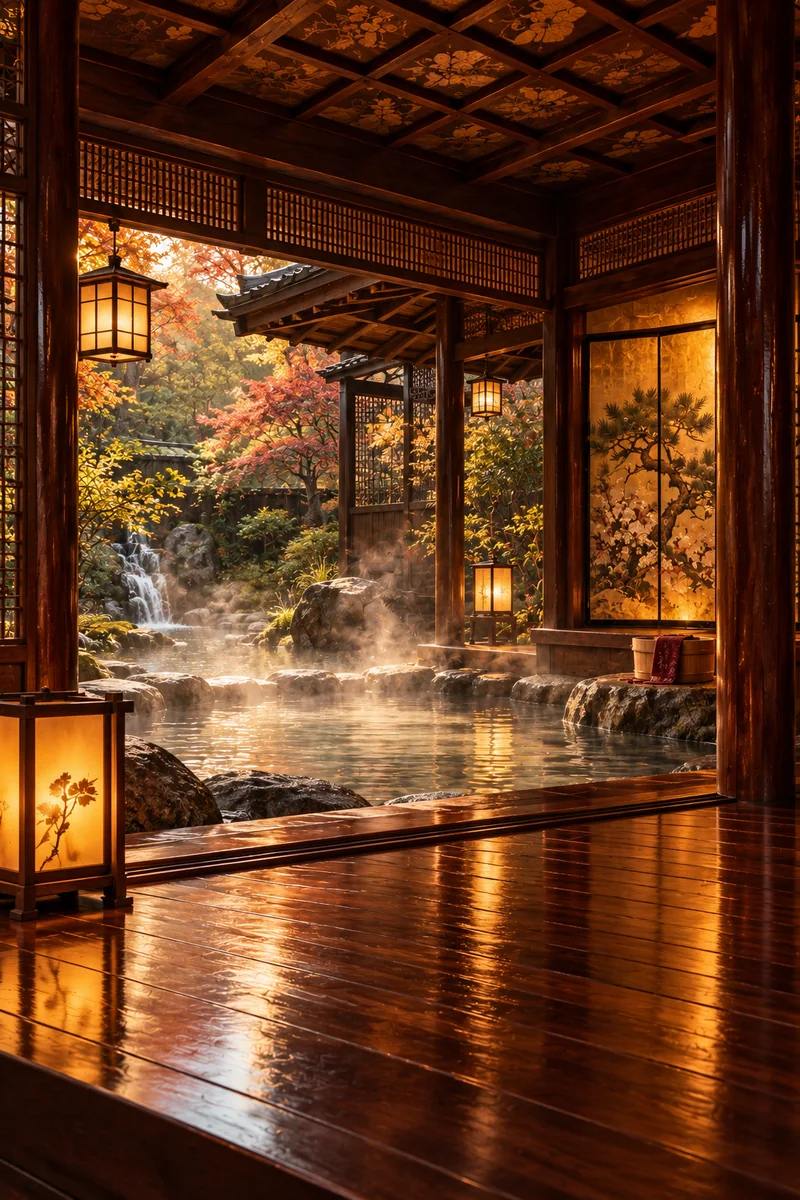
Fumi illustration of a steaming stone bath, glowing lanterns and warm timber beside a Japanese autumn garden
THE FUMI ONSEN COLLECTIONWarm water.
A wider view of Japan.

BEFORE YOUR FIRST BATH

Your first
onsen bath.

Wash. Soak. Enjoy the quiet.

A gentle introduction to Japan’s hot-spring baths—from the changing room and washing station to entering the water and enjoying the calm.

Watch the guide, then take the four simple steps below with you.

Read the first-bath essentials →
1:38English narration · English captions
Read the film transcript

Imagine warm water, rising steam, and a quiet moment just for you. Your first onsen is easier than you might think. An onsen is a Japanese hot-spring bath, using water naturally heated beneath the earth. Indoors or open to the sky, the bath is for soaking and relaxing. Before you go, check the facility's entry and tattoo policies. Follow its posted rules, and ask staff if anything is unfamiliar. If you would feel more comfortable with privacy, ask whether a private bath is available. Leave clothes and belongings in the changing area. Bathing is usually without swimwear. Keep your phone and camera outside the bathing area. First, wash. Sit on the low stool at a washing station, and wash your body thoroughly. Keep the shower spray close and considerate. Rinse away every trace of soap and shampoo before you move to the bath. Then, soak. Ease into the water slowly: it may be hotter than you expect. Give yourself time to settle. Keep your small towel on the side, out of the water, and tie up long hair. Now enjoy the quiet. Speak softly, and avoid swimming or splashing. Notice the steam, the changing light, and the sound of water. Step out if you feel too hot. Afterwards, dry off before returning to the changing area, and take a drink of water. These customs are about consideration. A little preparation leaves you free to relax. Discover more with Fumi, at FumiTours.com.

A LITTLE CONFIDENCE GOES A LONG WAY

Before your first bath.

The bath is for soaking and relaxing.
These simple habits help everyone enjoy it.

  1. 01

    Before you arrive

    Check the facility’s entry and tattoo policies. If you’d prefer privacy, ask about a private bath.

  2. 02

    Leave the day behind

    Bathing is usually without swimwear. Leave clothes in the changing area and your phone outside the bathing area; follow local rules.

  3. 03

    Wash, then soak

    Wash at a washing station and rinse away all soap before entering the bath. Ease in gently, with towels and long hair out of the water.

  4. 04

    Enjoy the quiet

    Keep voices low and avoid swimming or splashing. Step out if you feel too hot. Dry off before returning to the changing area, then have a drink of water.

For more detail: JNTO’s official onsen guide ↗

SIX WAYS TO LOOK A LITTLE CLOSER

Where shall we begin?

Choose a chapter that speaks to you.
There’s no right order, and no rush.

CHAPTER 01 / 06Bathing with confidence

Entering the Water

A gentle introduction to Japan’s hot-spring baths, where quiet consideration helps everyone feel at ease.

Welcome. An onsen is a Japanese hot-spring bath.

Ease in slowly; the water may be hotter than expected. Keep the small towel and long hair out of the bath, speak softly, and do not swim or splash.

Some baths have entry restrictions or tattoo policies.

Watch what others do, follow posted instructions, and ask staff if uncertain.

Read a little further
CHAPTER 02 / 06Ryokan & hospitality

The Art of Welcome

Explore omotenashi through the thoughtful details of a ryokan stay—and the guest’s part in a considerate welcome.

At a ryokan, welcome is often expressed through attention rather than display. The word omotenashi is commonly used for this spirit of hospitality: caring for a guest wholeheartedly, with thought given to what may help before it is requested.

You may notice it in a calm greeting, tea waiting in the room, slippers set in order, a meal shaped by local and seasonal ingredients, or futon bedding carefully prepared.

These are examples; the details differ from one inn to another.

JNTO illustrates omotenashi through tea gatherings. In its Jikoin interview, the host describes careful preparation for guests’ comfort and mutual respect.

The guest has a part too: arrive at the agreed time, observe the house customs, treat the room and bath gently, and receive what is offered with attention. If something is unfamiliar, ask.

Read a little further
CHAPTER 03 / 06Space, silence & timing

The Space Between

Discover ma: the space, pause or timing that helps a room, a performance or a conversation take shape.

Between one thing and another, there is an interval.

In Japanese, ma can mean a gap, space, pause or timing. It may be the open floor around a single object, the silence that gives music its shape, or the breath between one person speaking and another replying.

Artists, architects and performers have used ma to notice that what seems empty can still do important work.

Ma is more than tidiness. Historian Michael Lucken argues that its treatment as a broad Japanese aesthetic developed through modern intellectual exchange. Earlier uses of intervals should not be confused with that later theory. Here, ma offers a way of looking, rather than a complete account of Japan.

Read a little further
CHAPTER 04 / 06Seasons & Japanese aesthetics

Beauty That Does Not Last

Steam, changing light and weathered wood offer a way into distinct Japanese traditions of impermanence and beauty.

In Japanese Buddhist thought, mujō names impermanence: things arise, change and pass away. The aesthetic ideas that follow have different histories and meanings.

Mono no aware is the tenderness or ache stirred by things because they pass. Cherry blossoms are a familiar example, though not the only one.

Wabi came to value restrained, unshowy sufficiency, especially in the way of tea.

Sabi can name the quiet beauty, patina and solitude of things marked by age. The two words are now often joined as wabi-sabi, especially outside Japan, but they have distinct histories.

Yūgen points elsewhere: towards mysterious depth suggested rather than fully revealed, like mountains half-seen through mist.

These are artistic and philosophical traditions, not a personality shared by everyone in Japan.

Read a little further
CHAPTER 05 / 06Learning & relationships

Ways of Living Together

Meet one strand of Japanese intellectual history: debates about learning, humane conduct and relationships.

Confucian teachings reached Japan from China through several exchanges, including early transmission through the Korean peninsula. Japanese thinkers subsequently developed differing readings.

Early-modern Confucian thinkers debated language, learning, humane conduct and relationships. Orthodox Neo-Confucians linked self-cultivation with family and political order; other thinkers challenged their approach.

In discussions of learning, some thinkers used imitation as a starting point. Itō Jinsai’s example was calligraphy: practice with a model could develop into understanding.

This chapter follows one strand of intellectual history. It does not explain Japanese life through Confucianism alone.

Notice the strand; do not use it to explain every bow, hierarchy or modern habit.

Read a little further
CHAPTER 06 / 06Living spiritual traditions

Shrines, Temples and Living Traditions

Recognise useful clues at shrines and temples, and explore traditions with long, sometimes overlapping histories.

A torii is a useful clue to a Shinto shrine. Buddhist temples often have substantial entrance gates and Buddhist images. Confirm the particular site from its signs.

Shrines are places of reverence for kami—sacred presences or deities—while temples belong to Buddhist traditions centred on Buddhas, bodhisattvas, teachings and practices.

At many shrines, worshippers bow twice, clap twice, pray and bow once. At temples, visitors generally join their hands without clapping. Follow local instructions. You may choose simply to observe.

Purification basins, incense, shoe removal and photography rules vary, so follow the signs and the practice of the particular site.

Yet these are not sealed religious worlds. For centuries, kami and buddhas were interpreted together and given distinct, sometimes overlapping roles.

Many people still visit both shrines and temples.

Read a little further

From Fumi’s Onsen collection. A quiet place to pause, read and notice.

TAKE A LITTLE UNDERSTANDING WITH YOU

The next chapter
is yours.

You have reached the end of this path, though not the end of the subject. Take what was useful, leave room for other voices, and let your next bath, meal, journey or temple visit show you something this page could not.

Keep exploring Japan