
01 / Arrival, subway & JR
Osaka: learn the network
Start with Nankai, practise the Midosuji Line, then navigate a real operator change.
Open the exercises →Field trip • Working programme • Autumn 2026
A working survey of railway connections, station wayfinding and the traveller experience. The public edition shares the learning programme rather than a personal movement schedule.
Learn how the rail systems connect in practice: finding the right operator, choosing a service, transferring with luggage and emerging at the useful exit.
The field work also asks what a future Fumi travel assistant would need to understand. It records human observations and compares planning advice with the real journey; no live Fumi system is needed.
Open the working programmeObserve the arrival-to-station handover, luggage movement, ticket choices and the first local journey.
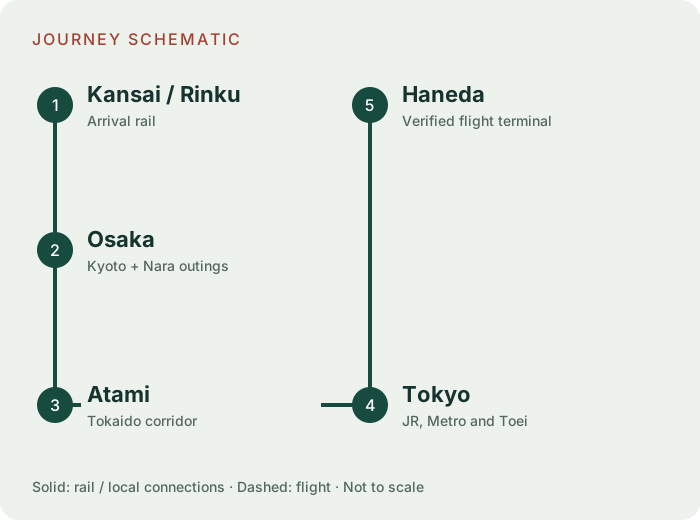
Use a stable city base. Practise Metro and JR changes, compare Kyoto arrival routes and take the Nara exercise from Kyoto.
Study the Shinkansen gate, departure display, car position and the difference between an intercity ticket and local transport.
Inspect the arrival, terrain and luggage effort between the station and the town. Record what a map alone fails to explain.
Practise JR, Metro and Toei transfers, the Keiyo connection, major-station exits and a controlled recovery from an unhelpful exit.
Use the current airline terminal and a generous departure margin. Finish the research before the time-critical airport journey.
The useful output: a verified route note, a record of transfer effort, three human observations and a clear distinction between facts checked and questions still open.
01 / Arrival, subway & JR
Start with Nankai, practise the Midosuji Line, then navigate a real operator change.
Open the exercises →
02 / Two flexible day trips
Compare JR and Keihan, add a short bus journey, then continue to Nara.
Open the exercises →
03 / Three days + airport module
Practise JR, Metro and Toei journeys, station exits and an airport transfer.
Open the exercises →