
Start here
Kansai Airport to Osaka
Choose JR or Nankai, understand the ticket, and find the correct Namba station.
Read the guide →
Rail journey • 21-day route
City railways, temple forests, castle towns and the southern Shinkansen corridor. A flexible example for travellers who enjoy understanding the connections.
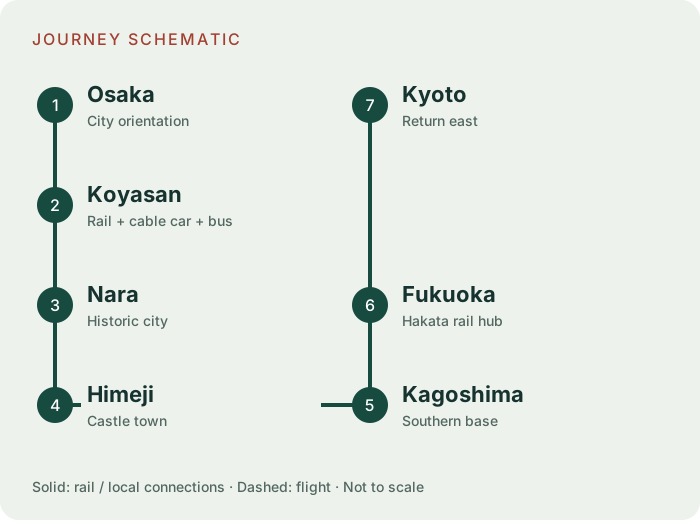
Seven bases over about three weeks. This example develops the original Osaka–Koyasan–Nara–Himeji–Kagoshima–Fukuoka–Kyoto route; it is not a departure schedule, reservation or package.
21 days / 20 nights
Move these days to suit your own flights, interests and opening days. Sightseeing is suggested; transport must be checked for your date.
Keep the arrival simple. Settle into one base and make a short neighbourhood walk.
Practise Hommachi, Shinsaibashi and Namba. Compare the station exit with the street you intended to reach.
Explore the Osaka/Umeda station district, then choose a local food street or museum.
Travel on the Nankai Koya route via Gokurakubashi, cable car and local bus. Allow time for each connection and temple check-in.
Visit the temple precincts and Okunoin respectfully. Follow local photography and access rules.
Return towards Osaka and connect to Nara. This is a multi-leg travel day, so keep the afternoon light.
Explore the park and temple district. Compare JR Nara and Kintetsu-Nara for the next journey.
Travel via the Osaka area. Stay locally if you want a full castle day without watching the last return train.
Allow a full day for Himeji Castle and the adjoining garden area. Check current opening and ticket information.
Join the Sanyo and Kyushu Shinkansen corridor to Kagoshima-Chuo; the service chosen may require a change. Plan a meal and luggage space.
Use local transport to connect the station district, city centre and waterfront.
Consider the ferry and local sightseeing, subject to weather, transport and current volcanic access advice.
Choose a garden visit or a second local outing. A spare day gives this long route some breathing room.
Take the Kyushu Shinkansen to Hakata. Understand the difference between the city name and its main rail station.
Explore Hakata and Tenjin, using the subway where it helps and walking where it is more revealing.
Stay in the city or investigate a Dazaifu outing. Check the complete connection and return journey first.
This is a substantial rail day along the Sanyo and Tokaido corridors. Compare a through service with a connection at Shin-Osaka.
Try the Karasuma and Tozai subway lines, then walk a compact Higashiyama route.
Compare Keihan access to eastern Kyoto with JR access to Kyoto Station. Add a short city-bus exercise if useful.
Choose one area rather than crossing the whole city. Keep room for a revisit or poor weather.
Arrange the airport or next-city transfer around your own ticket. No international flight is included in this example.
Accommodation approach
In Osaka, favour a clear subway connection. In Nara and Kyoto, compare the hotel’s actual station with the line you will use. Near Kagoshima-Chuo or Hakata, a simple arrival can be more useful than a distant bargain.
Koyasan offers a different experience: temple lodging may include meals and have set arrival and evening arrangements. Confirm these directly before committing to the rail day.
A hotel public bath and a natural hot spring are not automatically the same thing. Check the property’s facilities, access rules and any additional charges.
Transport choices
Compare individual tickets with regional or national passes only after dates and services are chosen. Operator coverage, validity and reserved-seat conditions matter more than a headline pass price.
The Kyoto finish deliberately returns east. If minimising backtracking is the priority, investigate a Fukuoka finish and a different international or domestic flight arrangement instead.
For a shorter trip: choose either Kansai with Koyasan and Nara, or a Kyushu-focused journey. Cutting bases is better than compressing every day.
Start here
Choose JR or Nankai, understand the ticket, and find the correct Namba station.
Read the guide →Travel between cities
Shin-Osaka, an Atami stop and the onward Tokyo transfer: what to prepare before reaching the gate.
Read the guide →Keep in your pocket
Learn what the card pays for, when an extra ticket is needed, and how to read a departure board.
Read the guide →