Enjoy the outings.
Use the sequence as a starting point. Walking, a meal and one worthwhile visit are part of the programme; there is no need to catch every suggested train.
Day 1
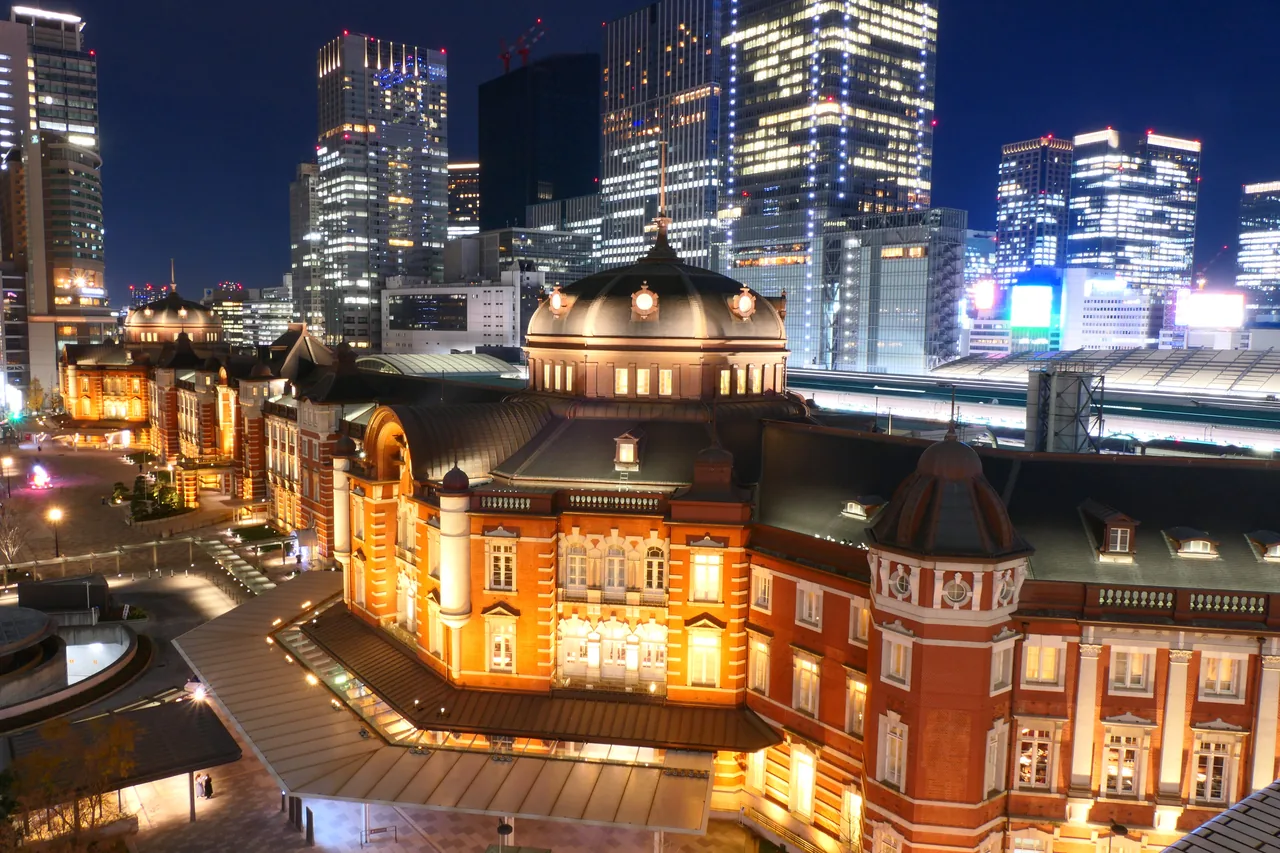
Tokyo Station, beyond the façade
Tokyo Station concourse → JR Keiyo platforms → Shiomi → Tokyo Station / Marunouchi
Begin with a clear starting point inside or outside Tokyo Station. Follow Keiyo Line signs to the more distant platforms and take a train stopping at Shiomi. If staying at Shiomi, reverse this outing. Return for a Marunouchi-side walk and enjoy the contrast between the station’s historic frontage and its underground railway corridors.
- Enjoy along the way
- The Marunouchi station façade and the station neighbourhood. Shiomi is the connection example, not a promise of a waterfront sightseeing stop.
- A useful connection
- Treat the Keiyo corridor as a walk in its own right. Allow a comfortable margin rather than assuming all Tokyo Station platforms are adjacent.
Day 2 · Outward
Ueno and Asakusa by two Metro lines
Shiomi → Hatchobori · JR Keiyo; Hatchobori → Ueno · Hibiya Line; Ueno → Asakusa · Ginza Line
At Hatchobori, follow the connection from JR to the Hibiya Line and ride towards Ueno. Make time for the park or one museum before changing to the Ginza Line for Asakusa. Join at Hatchobori if it is a more useful starting point from your accommodation.
- Enjoy along the way
- Ueno Park and a selected museum, then Asakusa’s public streets and temple approach. Keep the museum choice small enough to leave time for a meal.
- A useful connection
- At Hatchobori, JR and Metro are separate journeys. At Ueno, choose the signed Hibiya-to-Ginza connection and the Asakusa direction.
Day 2 · Return
A Toei return and a Ginza pause
Toei Asakusa → Higashi-ginza · Asakusa Line; Higashi-ginza → Hatchobori · Hibiya Line; Hatchobori → Shiomi · JR Keiyo
After Asakusa, find the Toei Asakusa Line entrance, which is separate from the Ginza Line station. Take a southbound service stopping at Higashi-ginza. Add a Ginza neighbourhood walk if you wish, then use the Hibiya Line to Hatchobori and JR for the final ride to Shiomi.
- Enjoy along the way
- Asakusa and the Higashi-ginza / Ginza area. You can finish in Ginza and choose a different return to your own base.
- A useful connection
- The Metro and Toei networks overlap, but have distinct lines and gates. Follow the line name and station code; at Higashi-ginza, follow the current Hibiya Line transfer signs.
Day 3
Two major stations, two different city views
Tokyo → Shinjuku · JR Chuo Rapid; Shinjuku → Shibuya · JR Yamanote; then a route back to your base
Use a Chuo Rapid train from Tokyo to Shinjuku. Choose a street destination before leaving the gates, spend time in that neighbourhood and return to JR for a Yamanote service to Shibuya. Take a break before choosing the return: the day does not need another complicated transfer to feel complete.
- Enjoy along the way
- A chosen Shinjuku neighbourhood and the Shibuya station district. The exit nearest your destination matters more than collecting every station landmark.
- A useful connection
- Check signs at each large station rather than following a familiar exit by habit. For a straightforward JR return, the Yamanote Line serves Tokyo too; compare it with a shorter route in the current planner.
Optional Haneda connection
Shiomi → Tokyo → Hamamatsucho · JR; Hamamatsucho → correct Haneda terminal · Tokyo Monorail
Use a suitable JR service from Tokyo to Hamamatsucho, then follow the separate Tokyo Monorail connection. Choose the terminal from the current airline ticket and airport guidance. Compare a Keikyu route from your actual accommodation as well. A hotel attached to Terminal 3 does not determine the departure terminal. Save airport exploration for a day without an imminent flight.
A shorter version that still feels like Tokyo
For one available day, use Hatchobori → Ueno → Asakusa and return by a familiar route. For two days, add the Tokyo Station or Shinjuku–Shibuya outing. Leave space for the places between rides rather than trying to complete the entire network.