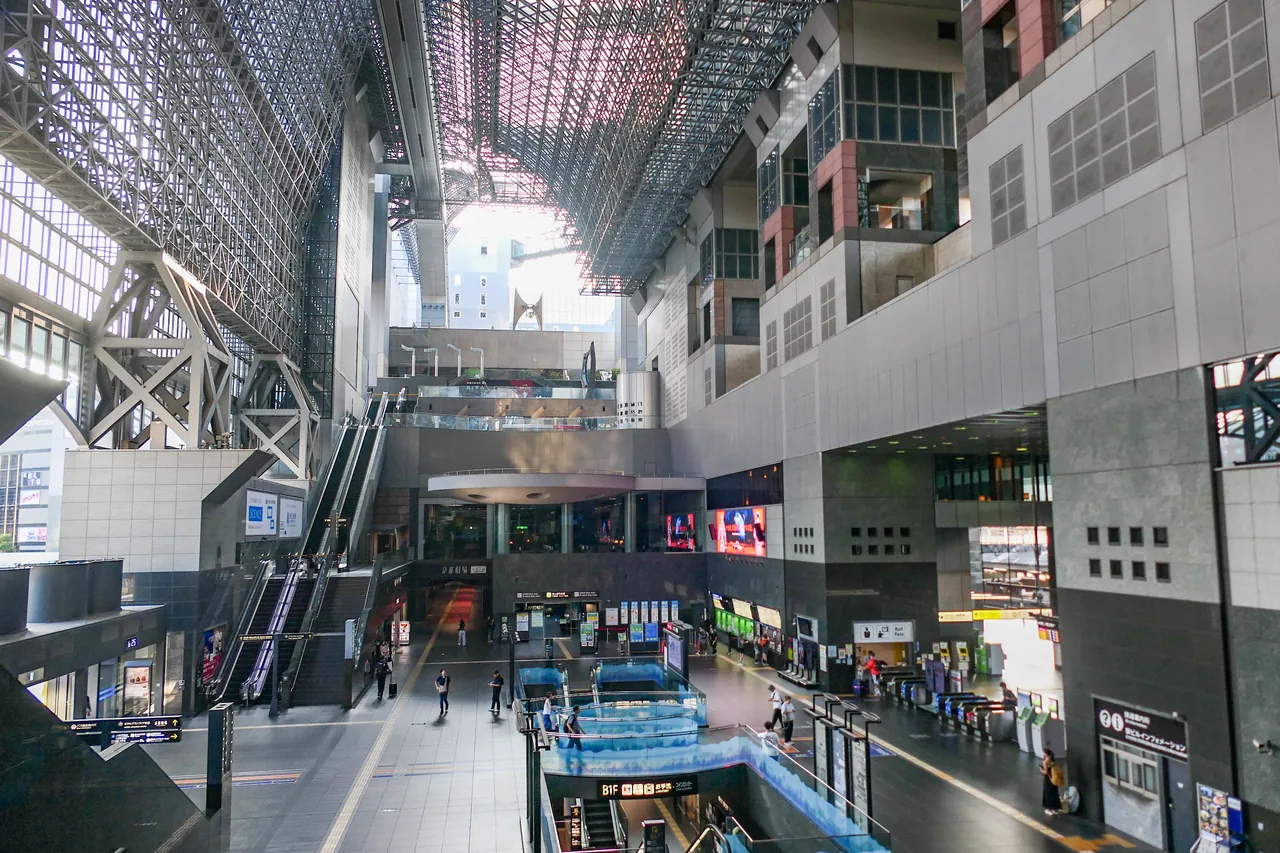
The soaring central concourse of Kyoto Station

Self-guided railway tour

Kyoto & Nara Railway Tour

A practical rail journey through Kyoto and on to Nara.

MaedaAkihiko · CC0 1.0 · cropped for display

Two outings with different arrivals: a Kyoto walking day reached by JR and subway, then a shrine-and-Nara journey returning by Kintetsu. Begin in Kyoto if you are staying there, or use the Osaka connections shown here.

Self-guided suggestion · no fixed departure · adapt the route to your own accommodation and walking pace.

The simple route

  1. Day 1Osaka → Kyoto → Karasuma Oike → Higashiyama; walk to Gion-shijo → Yodoyabashi → Osaka
  2. Day 2Kyoto → JR Inari → JR Nara; walk to Kintetsu-Nara → Osaka-Namba → Hommachi

Principal stations

Hommachi / Umeda / JR Osaka · Kyoto · Karasuma Oike · Higashiyama · Gion-shijo · Yodoyabashi · JR Inari · JR Nara · Kintetsu-Nara · Osaka-Namba

Day 1: allow about 2–3 hours for the Osaka–Kyoto return and city connections, including transfer walks and waits. Day 2: allow about 3–4 hours across the Osaka–Kyoto–Nara–Osaka circuit. These are planning allowances, not timetables.

Enjoy the outings.

Use the sequence as a starting point. Walking, a meal and one worthwhile visit are part of the programme; there is no need to catch every suggested train.

Day 1 · Morning

A Kyoto arrival that reaches your neighbourhood

Hommachi → Metro Umeda → JR Osaka → Kyoto; Karasuma Line → Karasuma Oike; Tozai Line → Higashiyama

From Osaka, use the Midosuji Line and signed walk to JR Osaka, then a Kyoto-bound JR Kyoto Line service. At Kyoto Station, follow the Karasuma subway signs, change at Karasuma Oike and take the Tozai Line east to Higashiyama. Kyoto-based travellers can join at the station or subway stop that suits them.

Enjoy along the way
The station concourse and a compact Higashiyama walk. Choose one temple or museum stop instead of crossing Kyoto repeatedly.
A useful connection
Karasuma Oike links Kyoto’s two subway lines. At Kyoto Station, JR and the subway have different gates; allow walking and waiting time beyond the regional train ride.

Day 1 · Afternoon

Gion streets and a different railway home

Higashiyama / Gion walk → Keihan Gion-shijo → Yodoyabashi → Metro Hommachi

Let the walk lead towards Gion and the river, with time for lunch or a quiet break. Use a suitable Keihan service from Gion-shijo to Yodoyabashi and the Midosuji Line for the final ride. Check whether the selected train needs a change. Kyoto-based travellers can finish at Gion-shijo or choose a useful local return.

Enjoy along the way
Higashiyama lanes, the Gion area and the riverbank. Keep to public streets and respect photography restrictions and residents’ privacy.
A useful connection
The Keihan arrival is different from JR Kyoto Station. A return by another operator can bring you closer to the afternoon’s final stop.

Day 2 · Morning

The shrine beside the railway

JR Kyoto → JR Inari · JR Nara Line

Start at Kyoto Station and take a train calling at JR Inari for the Fushimi Inari shrine approach. Kyoto’s current official guidance lists both local and rapid services calling here; confirm the selected train’s stopping list on the day. A short lower-ground visit works well before Nara; the longer uphill shrine walk is an alternative day in its own right.

Enjoy along the way
The shrine entrance and lower precinct. Choose the extent of the walk to suit your energy and the time left for Nara.
A useful connection
JR Inari and Keihan Fushimi-Inari are separate stations. If using Keihan instead, note that its limited-express trains do not stop at Fushimi-Inari.

Day 2 · Afternoon

Nara by JR, home by Kintetsu

JR Inari → JR Nara; town / park walk → Kintetsu-Nara → Osaka-Namba → Metro Namba → Hommachi

Choose a Nara-bound JR Nara Line service, making any change shown by the timetable. Walk through the city towards the park and leave time for a meal. Finish at Kintetsu-Nara for the Osaka return; check the departure’s destination and whether a change is needed. If based in Kyoto, use a Kyoto-bound Kintetsu route, checking for a change such as Yamato-Saidaiji.

Enjoy along the way
Nara’s town streets and a chosen area of Nara Park. One temple visit is enough for a fuller day; admission and closing times are separate from train running times.
A useful connection
JR Nara and Kintetsu-Nara are different stations. The latter usually gives a shorter approach to the park. At Osaka-Namba, follow Osaka Metro signs for the Midosuji return.

One useful Kyoto bus ride

Add a short bus segment only if it saves an awkward walk. Choose the route and direction from the current stop board. On ordinary Kyoto City Bus routes, board at the rear and pay when leaving at the front. EX100 and EX101 use front boarding, payment on entry and rear exit. Other companies can differ. Skip a crowded bus and keep the day rail-led if that is easier.

Before you go

Choose the places you want to visit, then check the train route, station exits and opening hours. Published time allowances here are approximate; queues, stopping patterns and walking pace can change the day.

Tickets and seats

Compatible transport IC cards are useful for the ordinary trains and Kyoto City Bus. Each separate ride and operator change must be handled at the correct gates. A JR pass does not automatically cover the subway, Keihan or Kintetsu. Choose a pass only after comparing its coverage with your planned rides.

The listed ordinary JR rapid, subway and Keihan services do not require a reserved seat. On Kintetsu, distinguish ordinary express services from reserved limited express: a limited-express ticket is required in addition to the basic fare.

Bags and walking

Keep these outings to a day bag. Kyoto sightseeing buses can be crowded and are poor places for a large suitcase. Locker availability is never guaranteed; leave bigger luggage at your base when possible.

Kyoto Station has several operators and levels. Consult the station maps for lifts before the transfer. Higashiyama lanes, shrine grounds and Nara Park include longer walks, slopes or uneven surfaces; reaching upper shrine paths adds many steps. A shrine approach, café and one park area can make a satisfying shorter day. Ask the operator about a specific step-free route rather than assuming the suggested walk is fully accessible.

The detailed guides